Key Takeaways
- An ATS score is a job-specific match rating (typically 0–100%) showing how well your resume aligns with one job description - not a universal grade of your resume's quality.
- Average ATS scores fall around 60–70%, and most experts recommend aiming for 75% or higher before submitting an application.
- Recruiters usually don't see the ATS score from tools like Jobscan or Resume Worded - it's a diagnostic tool for you, not a screening verdict.
What Is an ATS Score and Does It Matter for Your Resume? A Plain-English Guide for Job Seekers
You hit "submit" on a job application, never hear back, and wonder if a robot tossed your resume into a black hole. That robot is the ATS - and the number people obsess over is your ATS score. Here's what it actually measures, what it doesn't, and how much weight it should carry in your job search.
What Is an ATS Score?
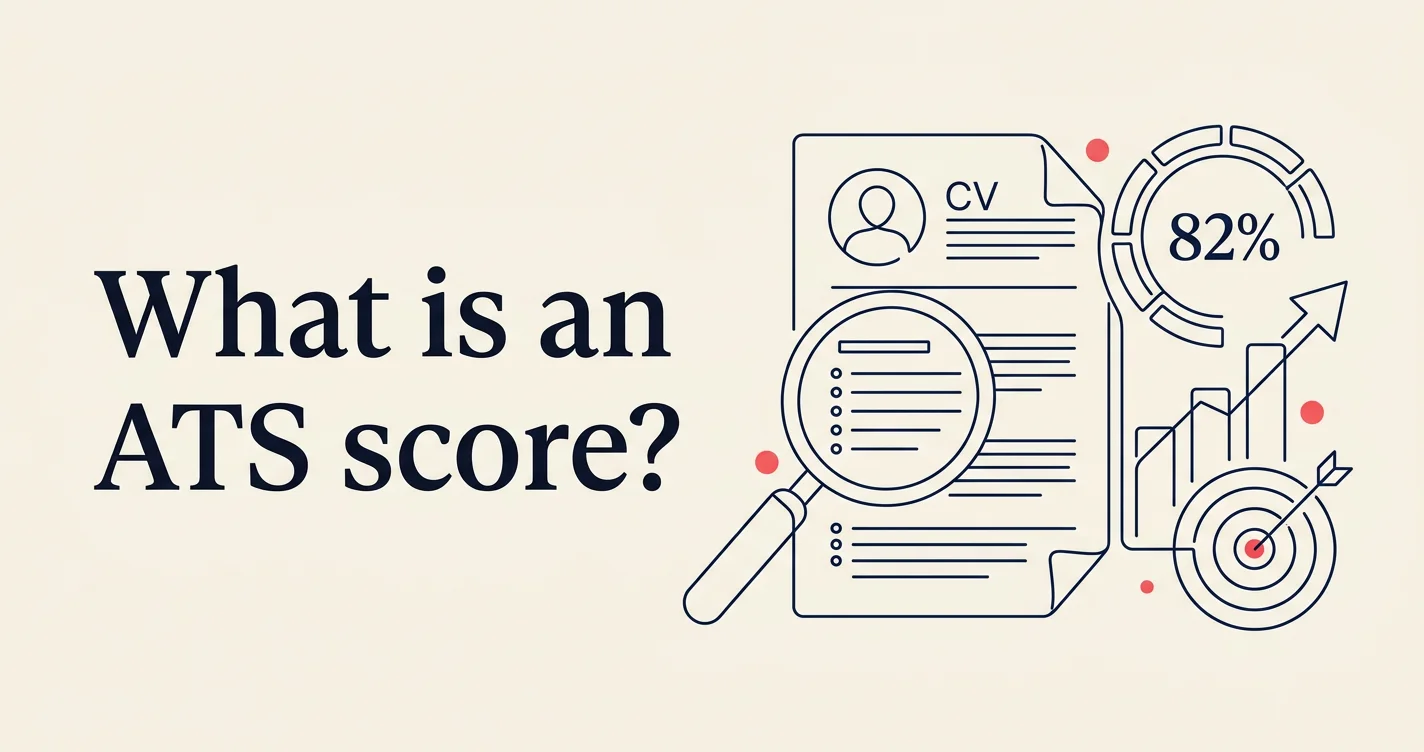
An ATS score is a numerical compatibility rating (usually 0–100%) that shows how well your resume matches one specific job description, based on keywords, required skills, job titles, certifications, and formatting. It's generated either by an employer's Applicant Tracking System or by external tools like Jobscan, Resume Worded, or CVCompose that simulate how an ATS would read your resume.
Critically, an ATS score is not a universal grade of resume quality - it's a job-specific relevance signal. The same resume can score 55% against one posting and 88% against another. There's also no industry-standard methodology: every ATS vendor (Workday, Greenhouse, Lever, Taleo, SAP SuccessFactors) calculates match differently, and many don't surface a visible score to recruiters at all.
It helps to know how the ATS score relates to nearby concepts. An Applicant Tracking System (ATS) is the underlying software employers use to receive, store, filter, and rank applications. An ATS-friendly resume is one formatted so the ATS can parse it cleanly - standard headings, no tables or columns, common fonts. Resume parsing is the step where the ATS converts your document into structured data. The ATS score sits on top of all three: it's a measure of how well your parsed, ATS-friendly resume aligns with what the ATS extracted from the job posting.
How Does an ATS Score Work?
An ATS score is calculated by parsing your resume and comparing its contents to a target job description. Here's what happens under the hood:
- Resume parsing. The ATS extracts text from your PDF or DOCX and tries to map it into structured fields - name, contact info, work experience, education, skills. Complex layouts (tables, columns, text in images) break this step.
- Keyword matching. The system scans for skills, technologies, certifications, and job titles pulled from the posting. Exact wording matters - many ATS engines recognize synonyms poorly.
- Qualification check. Years of experience, education level, location, and seniority are compared to job requirements.
- Scoring or filtering. Some ATS produce a percentage match; others just filter candidates in or out based on hard criteria. Many ATS don't show recruiters a numeric score - they show ranked or filtered lists.
- Diagnostic output (in external tools). Tools like Jobscan or CVCompose surface a percentage plus a list of missing keywords, formatting warnings, and suggested fixes.
The key takeaway: the "score" you see from a third-party checker simulates this process - it's not the literal number an employer sees.
Does an ATS Score Actually Matter?
Yes, but less than most candidates think. An ATS score matters because it reflects whether your resume "speaks the language" of the job posting - and that alignment increases the chance a human recruiter actually reads your application. It does not matter as a literal gatekeeping number that recruiters review.
Analysis from Scale.jobs (2025), which studies real recruitment data, puts it bluntly: "ATS scores matter less than you think." The score is useful as a diagnostic tool to spot gaps, not as a predictor of interviews. HRLens calls it a "relevance estimate, not a career verdict."
So the practical answer is: optimize for the underlying signal (keyword fit, clean formatting, relevant skills), and the score follows naturally.
What's a Good ATS Score? Benchmark Table
There's no official passing grade, but the numbers below reflect what experts and resume tools recommend in 2024–2026.
| ATS Score Range | What It Means | What to Do |
|---|---|---|
| Below 50% | Weak match - major keyword and skills gaps | Rewrite resume against the job description before applying |
| 50–65% | Below average - partial alignment | Add missing skills, certifications, and exact job-posting language |
| 65–75% | Average match (most candidates land here) | Refine bullets and skills section before submitting |
| 75–85% | Strong match - recommended submission threshold | Apply; do a final human readability check |
| 85%+ | Excellent alignment | Apply with confidence; avoid keyword stuffing |
CareerHelp recommends targeting ≥75% before clicking submit. The "average" candidate sits around 60–70%, which is why a small amount of tailoring usually puts you ahead of the pile.
How Do You Check Your ATS Score?
You can check your ATS score in two ways - through an automated tool, or with a manual keyword count.
Automated (fastest): Upload your resume and paste the job description into a checker. You can check your resume's ATS score for free with CVCompose and get a breakdown of missing keywords, formatting issues, and section-by-section fixes in under a minute. Other widely used tools include Jobscan, Resume Worded, SkillSyncer, and 1MillionResume's free checker.
Manual (no tools): Print the job posting and your resume. Highlight every required skill, technology, certification, and keyword in the posting. Highlight matching items in your resume. Then calculate:
(Matched keywords ÷ Total keywords in the posting) × 100 = your approximate ATS score.
If you land under ~75%, fill the gaps where you can do so truthfully.
How to Improve Your ATS Score Without Wrecking Your Resume
Imagine you're applying to a senior marketing role at a large enterprise. The posting mentions "SEO," "Google Analytics 4," "B2B SaaS," and "CRM (HubSpot)" - but your resume just says "digital marketing experience." Your ATS score will be low, and a recruiter may never see your application. Here's how to fix that:
- Mirror the job posting's exact language. If the posting says "Search Engine Optimization (SEO)," write both the acronym and the full term. ATS engines often miss synonyms.
- Use standard section headings. "Work Experience," "Education," "Skills" - not creative labels like "My Career Journey." ATS parsers look for predictable headers.
- Drop tables, columns, icons, and text boxes. They confuse parsing. Stick with a single-column layout and standard fonts (Arial, Calibri, Times New Roman).
- Spread keywords naturally. Distribute them across your Summary, Skills section, and bullet points - not crammed into one block.
- Save as PDF or DOCX. Both work with modern ATS; follow the employer's instructions when given.
- Skip keyword stuffing. Repeating "project management" eight times will hurt you when a human reads the resume.
Want a second opinion before applying? Get your resume reviewed by AI for tailored feedback, or browse ATS-friendly resume templates built to parse cleanly the first time.
Summary: Should You Care About Your ATS Score?
Care about it - but in proportion. An ATS score is the best free diagnostic you have for spotting what your resume is missing relative to a specific job. It's not a verdict, a final grade, or what recruiters see on their screen. Aim for 75%+, fix real gaps, and never sacrifice readability for a higher number.
Ready to see where your resume stands? Run it through the free ATS resume checker on CVCompose and find out which keywords you're missing before your next application goes out.
About the Author
CVCompose
Resume building and ATS optimization tool
CVCompose helps candidates pass ATS filters and land more interviews. Our tools - from ATS score checkers to AI-powered resume reviews - are built on analysis of hundreds of thousands of applications and current hiring trends.